.svg)
.svg)
The morale fix most IT leaders miss: Why listening beats solving when teams struggle
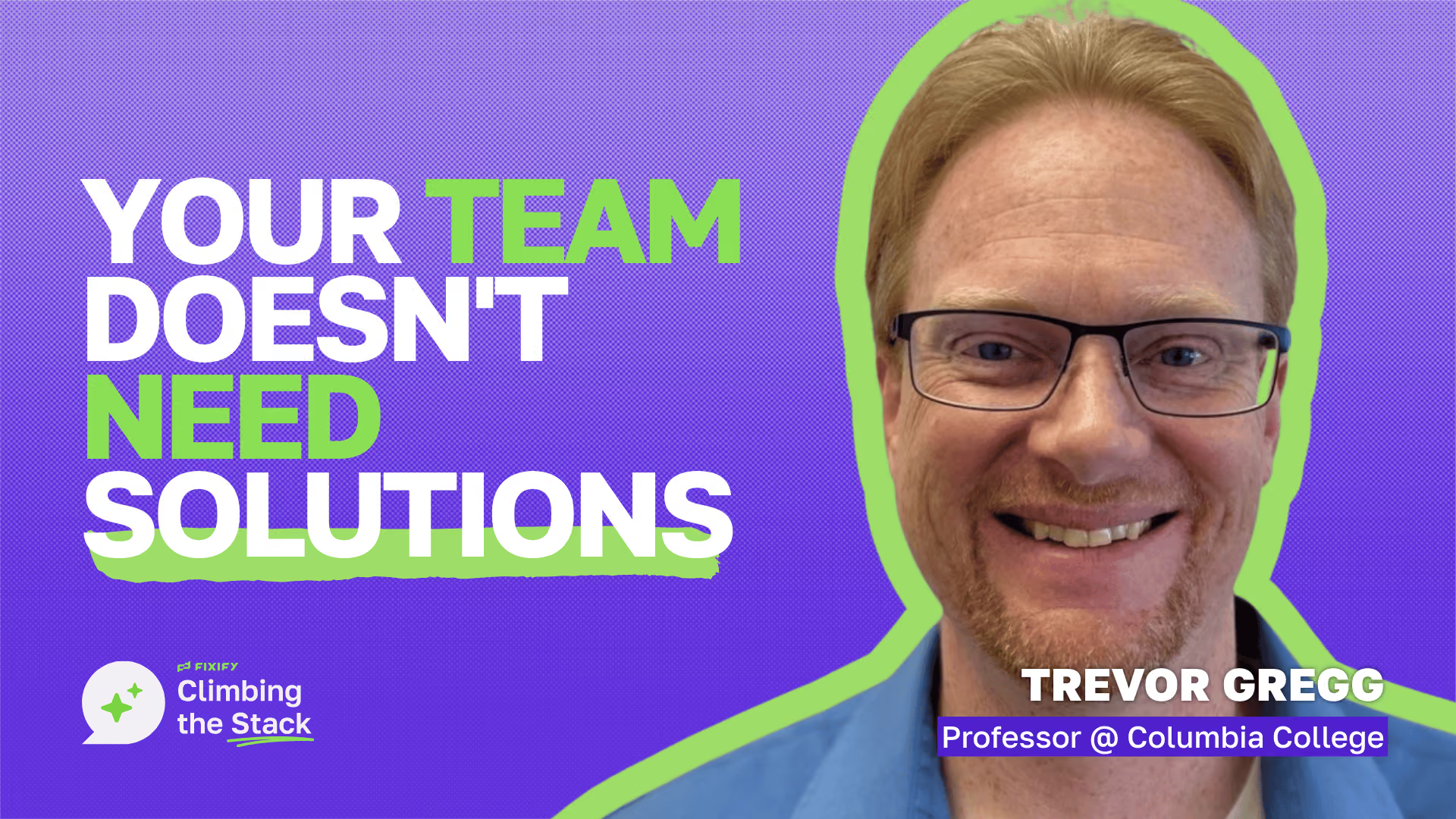
Table of contents


About this episode
When Trevor Gregg inherited a county service desk, morale was in the basement. He didn't run surveys, and he didn't propose solutions. Instead, he brought a county board supervisor directly to his team to listen without offering any fixes.
That single move solved what performance reviews and skip-levels couldn't. His team already knew the technical fixes. What they needed was to feel heard before they could move forward. For IT leaders, the lesson is uncomfortable: when morale craters, your instinct to problem-solve can actually prevent recovery. Your job is to facilitate the conversation, not dominate it.
Trevor now teaches the same principle as a Professor at Columbia College, where he runs a Google-funded IT pre-apprenticeship program for students ranging from high schoolers to career-switchers in their 50s. His students build their lab infrastructure from raw cable and blank machines, and when one team's DHCP configuration blocks another team's progress, collaboration stops being optional. He designs it that way on purpose, because for technical people, the hardest skill usually isn't debugging. It's asking for help.
"We are all in this together."
He also walks Matt Peters through the SCARF method for stakeholder conversations, which stands for Status, Certainty, Autonomy, Relatedness, and Fairness. Proposals often get archived not because the technical solution is weak, but because the pitch triggered a threat response in the audience. Trevor trains his students to structure conversations that avoid that defensive reaction, a skill many directors only learn after years of rejected proposals.
His own path into IT was anything but traditional. He earned an astronomy degree, did research on NASA's Kepler space telescope, where he learned Linux, and helped run his family's pizza restaurants, where he learned servant leadership before he knew the term. He showed up to his first IT leadership role in a suit on day one and was running cable on day two.
What you'll learn in this episode
- Why listening beats solving when team morale craters
- How bringing leadership in to listen can fix what performance reviews can't
- How the SCARF method keeps stakeholder pitches from triggering a threat response
- Why proposals get archived even when the technical solution is strong
- How forced interdependence teaches technical people to collaborate
- Why asking for help is the hardest skill for many technical people
- How non-traditional career paths build unexpected technical depth
- How servant leadership builds credibility with a new team
About Trevor Gregg
Trevor Gregg is a Professor at Columbia College, where he teaches the Google-funded IT pre-apprenticeship program, and he supervises IT operations at Tuolumne County.
His unconventional path includes earning an astronomy degree from San Diego State University, conducting research on NASA's Kepler space telescope, managing his family's pizza restaurant operations, and publishing science fiction. He brings servant leadership principles and a measurement mindset to both county IT operations and training the next generation of IT professionals.
Resources mentioned
About the host
Matt Peters is the CEO and Co-Founder of Fixify, where he's redefining the IT help desk for the AI era. Before founding Fixify, he was Chief Product Officer at Expel and held senior leadership roles at FireEye and Mandiant, where he helped pioneer some of the earliest managed detection and response services.
Episodes you might like
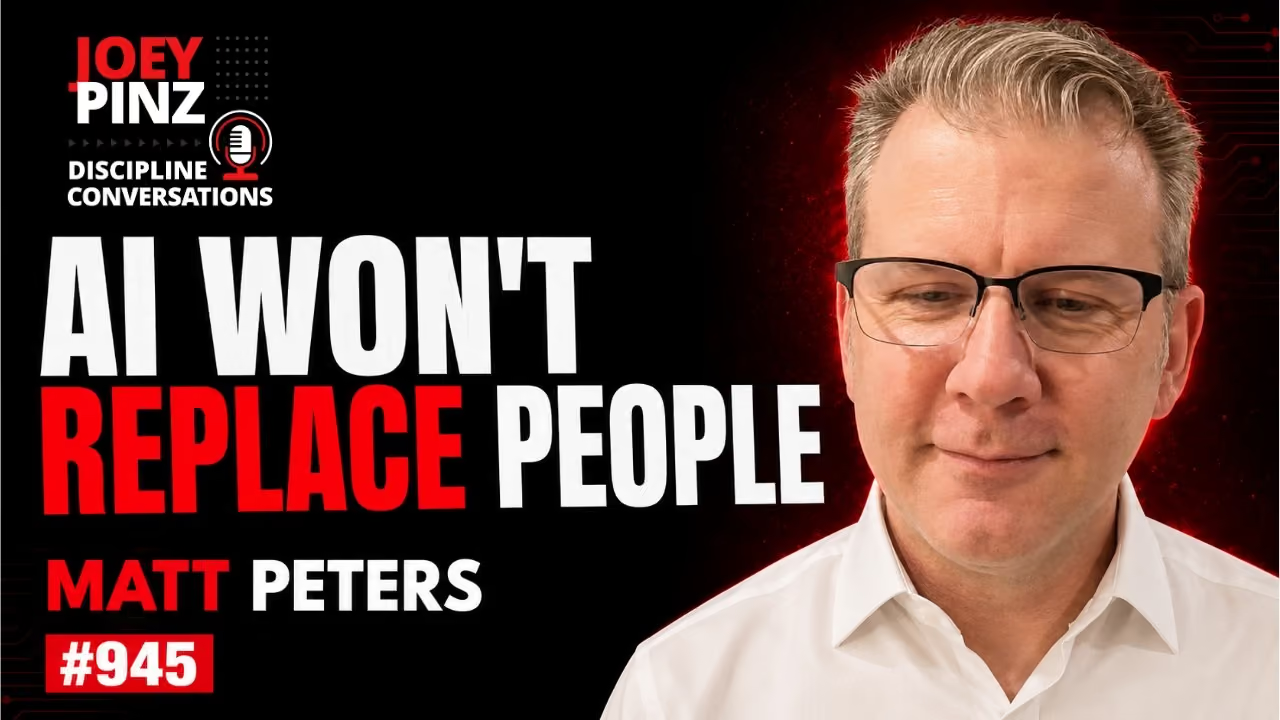
Why human care still wins in an AI world
Matt Peters, CEO and Co-Founder of Fixify, joins Joey Pinz to explain why AI should help talented technicians do more meaningful work, not replace them.
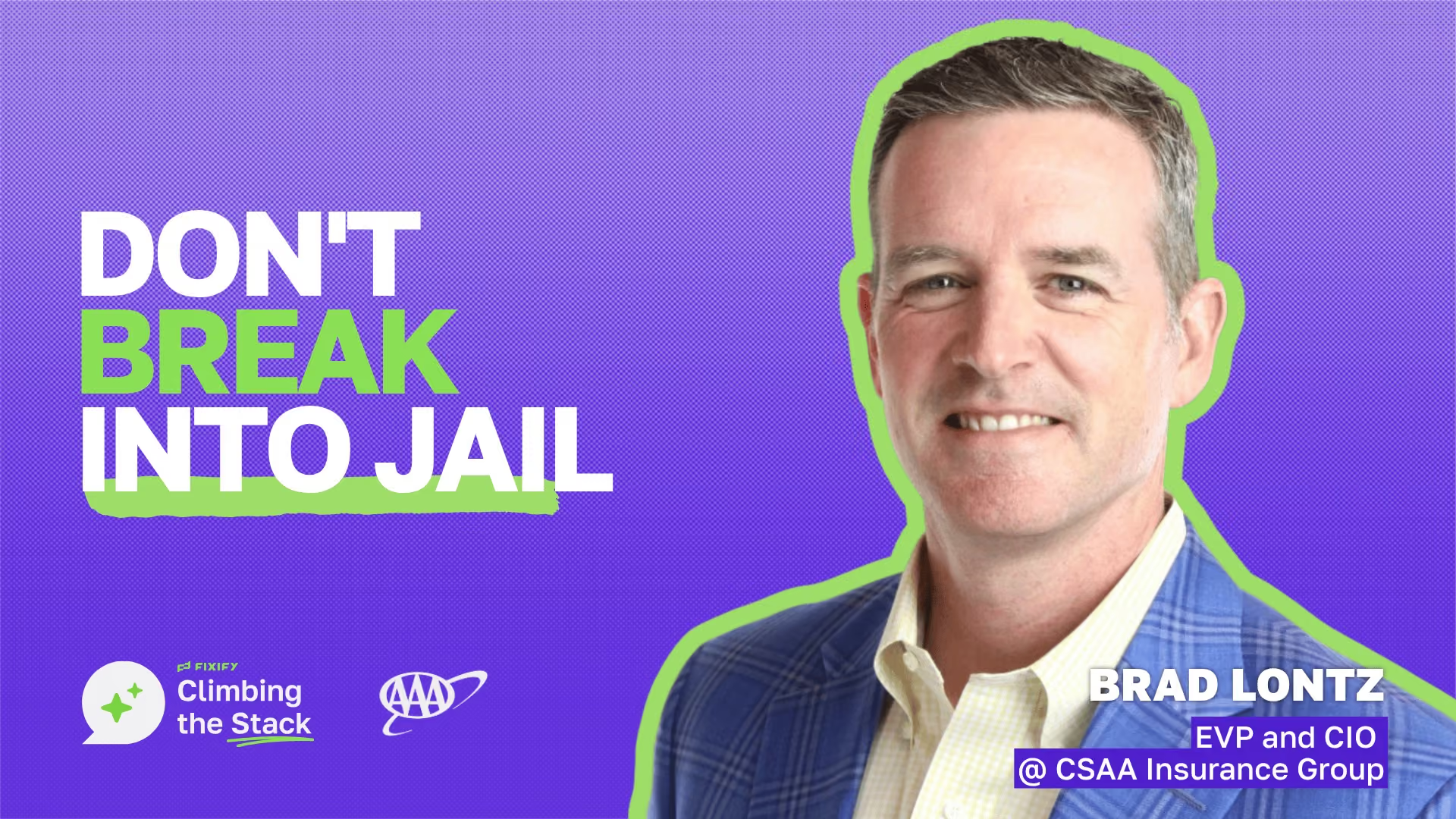
Don't break into jail: How to present technology to the board
Brad Lontz, EVP and CIO at CSAA Insurance Group, explains why he keeps no separate AI strategy and how he learns a new business through its value chain instead of starting with the CFO.
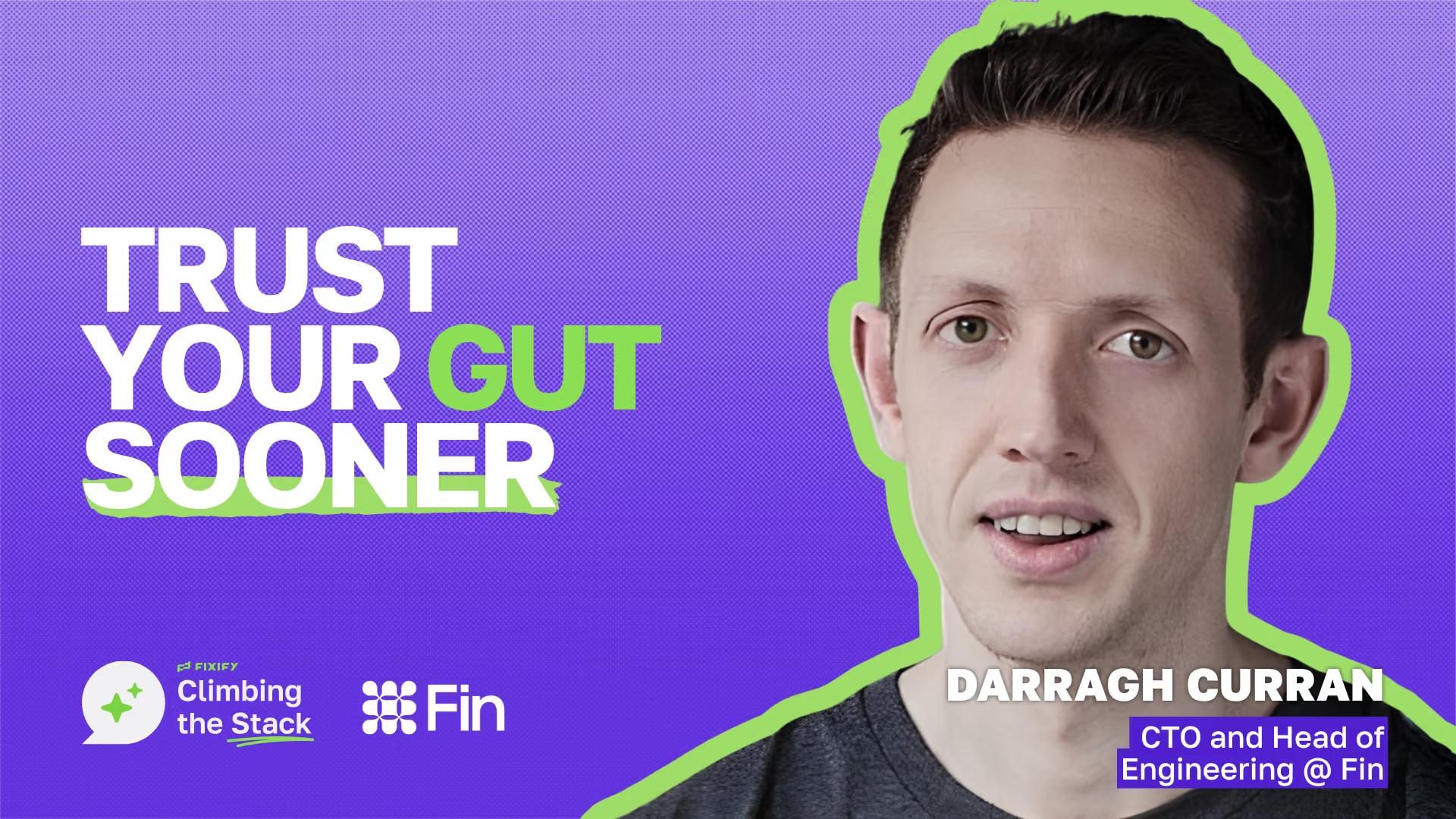
Trust your gut: The leadership advice I'd give my younger self
Darragh Curran, CTO and Head of Engineering at Fin, explains why writing code has become the easy part of building software and why he hires for traits over experience.

Join us as a guest!
