.svg)
.svg)
The first 60 days: What new VPs actually do differently
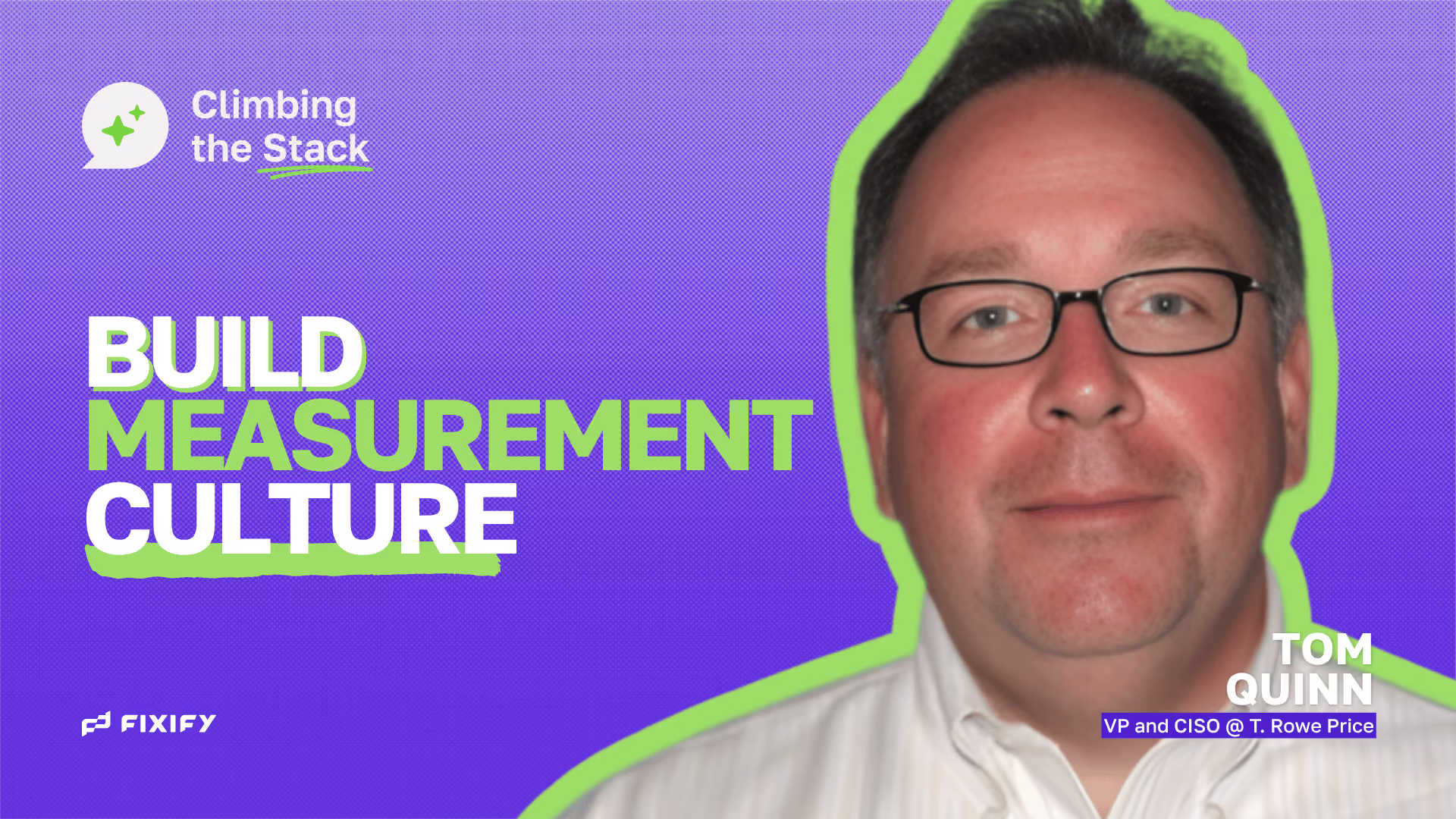
Table of contents


About this episode
When Tom Quinn, VP and CISO at T. Rowe Price, steps into a new leadership role, his first 60 days start with a listening tour. That means asking people for their opinions and actually listening, across every kind of stakeholder: his own team and its managers, their peers across the organization, business teams, legal and compliance, and the board. Whatever came before him, he wants to hear what people liked and what they didn't.
From there, he makes small, incremental changes once he has a feel for what needs to be done, then plays back what he's learned, listens again, and repeats. His questions start simple: Who are you? What do you do? How does my team work with you? What frustrates you? But he always asks one more, because it's where the real issues come out.
"If there's anything at all that isn't working, I want to know. It doesn't have to do anything with my team. I just want to understand the pain points that you have."
That's when people stop giving perfunctory answers and start talking about regulatory pressure or missing budget. Tom pushes past vague words too. When someone calls a project "challenging," he asks for details, because "challenging" might mean a difficult relationship, a lack of budget, or a boss who won't let them go off script. As he puts it, context is gold.
Tom also refuses vague answers inside his own team. At one company, he asked how many identity access tickets they closed each day. The answer was "a lot." Most leaders would accept that and move on. Tom made them track it instead.
The first time, getting the number took six hours. Two weeks later, it took four. A month in, the team had a real-time dashboard. And once the data existed, the pattern was obvious: 80% of the tickets came from a single call center with high turnover. Automating role provisioning there saved 20 hours a week, worth about $50,000 a year.
For Tom, that's the difference between directors who stay stuck and leaders who make VP. Directors accept vague answers and manage what's in front of them. VPs build a culture of measurement and find the leverage points that actually matter.
He also walks Matt Peters through his path from Navy officer aboard the USS El Paso to security leadership roles at Goldman Sachs, BNY Mellon, and T. Rowe Price. Along the way, he learned that leadership isn't about having all the answers. It's about creating psychological safety without being a pushover, and freeing up your team's time so they aren't stuck on the hamster wheel.
What you'll learn in this episode
- What new leaders should do in their first 60 days
- The one listening-tour question that surfaces real pain points
- Why accepting vague answers keeps directors stuck
- How to build a culture of measurement on your team
- How one ticket metric uncovered a $50,000-a-year automation win
- How to create psychological safety without being a pushover
- How to free your team from the hamster wheel
- How a Navy background shapes security leadership
About Tom Quinn
Tom Quinn is VP and CISO at T. Rowe Price. He's a former U.S. Navy officer who brings a measurement-first, people-centered approach to security leadership. His background in political science and international relations helped him build the business context that proved valuable in his finance and technology roles.
Resources mentioned
- The Tipping Point: How Little Things Can Make a Big Difference by Malcolm Gladwell
- Blink: The Power of Thinking Without Thinking by Malcolm Gladwell
- Linked: The New Science of Networks by Albert-László Barabási
- Against the Gods: The Remarkable Story of Risk by Peter L. Bernstein
- Wiring the Winning Organization by Gene Kim and Steve Spear
- The Creative Act: A Way of Being by Rick Rubin
- Security leadership insights from Phil Venables
- Connect with Tom Quinn on LinkedIn
About the host
Matt Peters is the CEO and Co-Founder of Fixify, where he's redefining the IT help desk for the AI era. Before founding Fixify, he was Chief Product Officer at Expel and held senior leadership roles at FireEye and Mandiant, where he helped pioneer some of the earliest managed detection and response services.
Episodes you might like
Why human care still wins in an AI world
Matt Peters, CEO and Co-Founder of Fixify, joins Joey Pinz to explain why AI should help talented technicians do more meaningful work, not replace them.
Don't break into jail: How to present technology to the board
Brad Lontz, EVP and CIO at CSAA Insurance Group, explains why he keeps no separate AI strategy and how he learns a new business through its value chain instead of starting with the CFO.
Trust your gut: The leadership advice I'd give my younger self
Darragh Curran, CTO and Head of Engineering at Fin, explains why writing code has become the easy part of building software and why he hires for traits over experience.

Join us as a guest!
