.svg)
.svg)
Engineer to C-suite: Why financial fluency and storytelling separate real executives
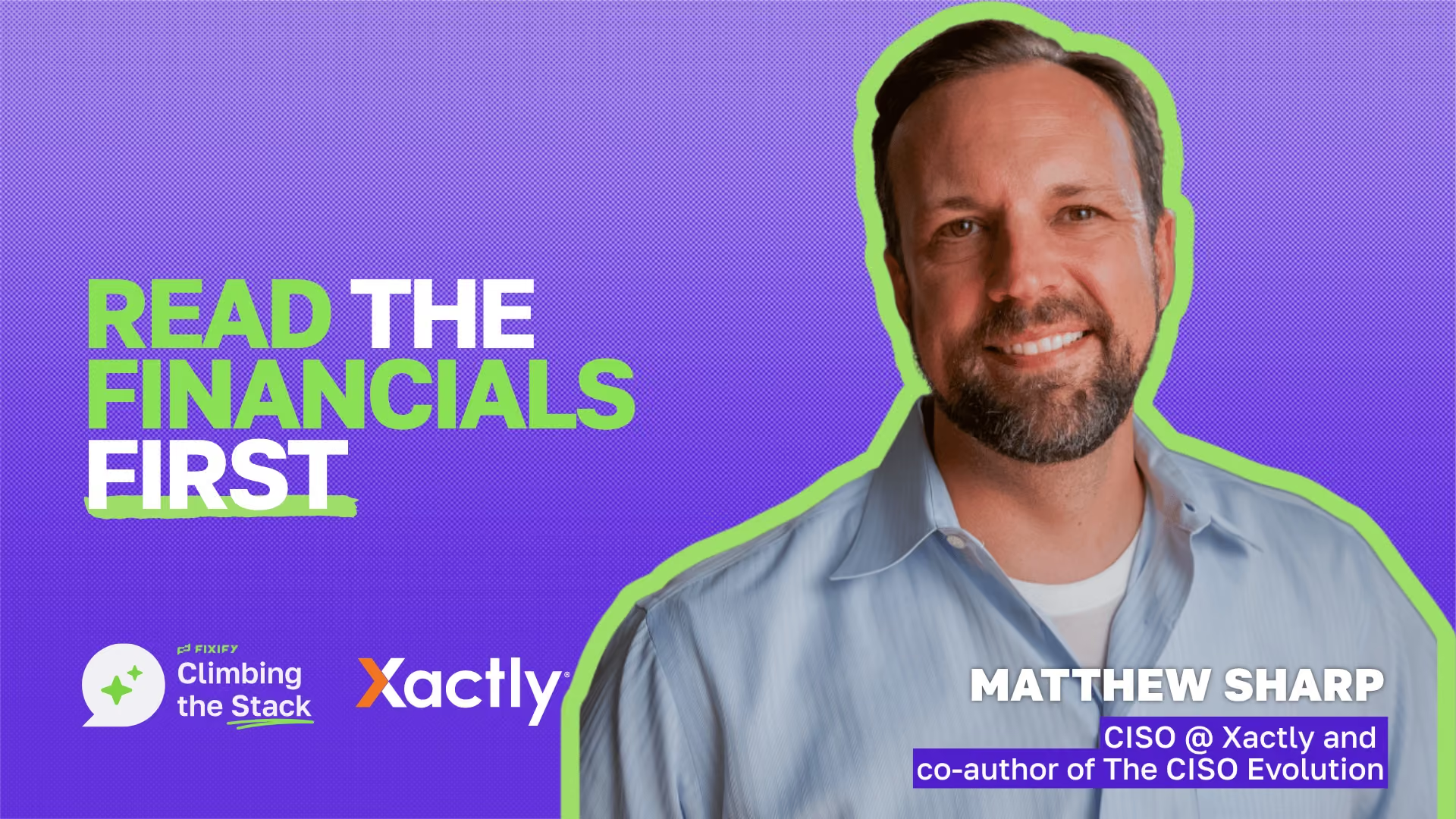
Table of contents


About this episode
Matthew Sharp came up as a computer and electrical engineer, and he once thought sales was the devil's work. Then he spent four years selling specialized security services and learned the opposite. He often walked into meetings knowing more about a client's business than the CISO across the table did, down to how they segmented revenue on their financial statements.
"Oftentimes I found that I knew more about their business than they did."
Now CISO at Xactly and co-author of The CISO Evolution, Matthew argues that technical leaders stall on the climb to the C-suite because they can't connect security to the business. His fix is more concrete than the usual advice to "speak the language of business." Learn to read the three financial statements and how they tie together, and you can frame any security decision in terms an executive actually cares about.
He also walks Matt Peters through the difference between moral authority and formal authority, an idea he took from Stephen Covey, and why he steers clear of the RFP as both a buyer and a seller. As an introvert, he stopped treating networking as artificial once he went into every room curious about what each person could teach him.
"The reality is it's more about influence than it is about dictates. And that turns out to be true no matter how high up the ranks you go."
Matthew shares the body, mind, heart, and spirit sabbatical that took him from Everest base camp to the Camino de Santiago, Mandarin study, and a month teaching English in Vietnam. The trip gave him cross-cultural empathy, including for why someone in a hard economy might turn to ransomware.
At Xactly, he built an India-based Center of Excellence, a Snowflake security data lake, and a 24x7 AI SOC. His team also uses machine learning to forecast the sales pipeline, so they can clear cyber diligence on the deals most likely to close. He closes with where that's heading: third-party diligence negotiated between MCP servers with a human in the loop, instead of an army of people slinging spreadsheets.
What you'll learn in this episode
- Why reading the three financial statements is the first step to speaking with executives
- How moral authority differs from formal authority in security leadership
- Why steering clear of the RFP can work for both buyers and sellers
- How a curious mindset makes networking work for introverts
- How storytelling separates real executives from technical leaders
- How machine learning can prioritize cyber diligence on the deals most likely to close
- How jobs-to-be-done hiring scales with AI agents
- Why third-party diligence may soon be negotiated between MCP servers
About Matthew Sharp
Matthew Sharp is the Chief Information Security Officer at Xactly Corp, where he built a business-aligned security program, an India-based Center of Excellence, and a 24x7 AI SOC on a Snowflake data lake. He is the co-author of The CISO Evolution: Business Knowledge for Cybersecurity Executives and has spoken at events including RSA Conference and Snowflake Summit.
Before Xactly, Matthew was CISO at Logicworks and Head of Global Information Security at Crocs, and he spent four years as Director of Strategic Services at FishNet Security, now Optiv. He started out in penetration testing and audit at Coalfire. He holds an MBA from Colorado State University and a B.S. in Computer and Electrical Engineering from the University of Colorado Boulder.
Resources mentioned
- How to Read a Financial Report: Wringing Vital Signs Out of the Numbers by John Tracy and Tage Tracy
- The 7 Habits of Highly Effective People by Stephen Covey
- Let's Get Real or Let's Not Play: Transforming the Buyer/Seller Relationship by Mahan Khalsa
- The CISO Evolution: Business Knowledge for Cybersecurity Executives by Matthew Sharp and Kyriakos Lambros
- Connect with Matthew Sharp on LinkedIn
About the host
Matt Peters is the CEO and Co-Founder of Fixify, where he's redefining the IT help desk for the AI era. Before founding Fixify, he was Chief Product Officer at Expel and held senior leadership roles at FireEye and Mandiant, where he helped pioneer some of the earliest managed detection and response services.
Episodes you might like
Why human care still wins in an AI world
Matt Peters, CEO and Co-Founder of Fixify, joins Joey Pinz to explain why AI should help talented technicians do more meaningful work, not replace them.
Don't break into jail: How to present technology to the board
Brad Lontz, EVP and CIO at CSAA Insurance Group, explains why he keeps no separate AI strategy and how he learns a new business through its value chain instead of starting with the CFO.
Trust your gut: The leadership advice I'd give my younger self
Darragh Curran, CTO and Head of Engineering at Fin, explains why writing code has become the easy part of building software and why he hires for traits over experience.

Join us as a guest!
