.svg)
.svg)
From director to CIO: What actually changes
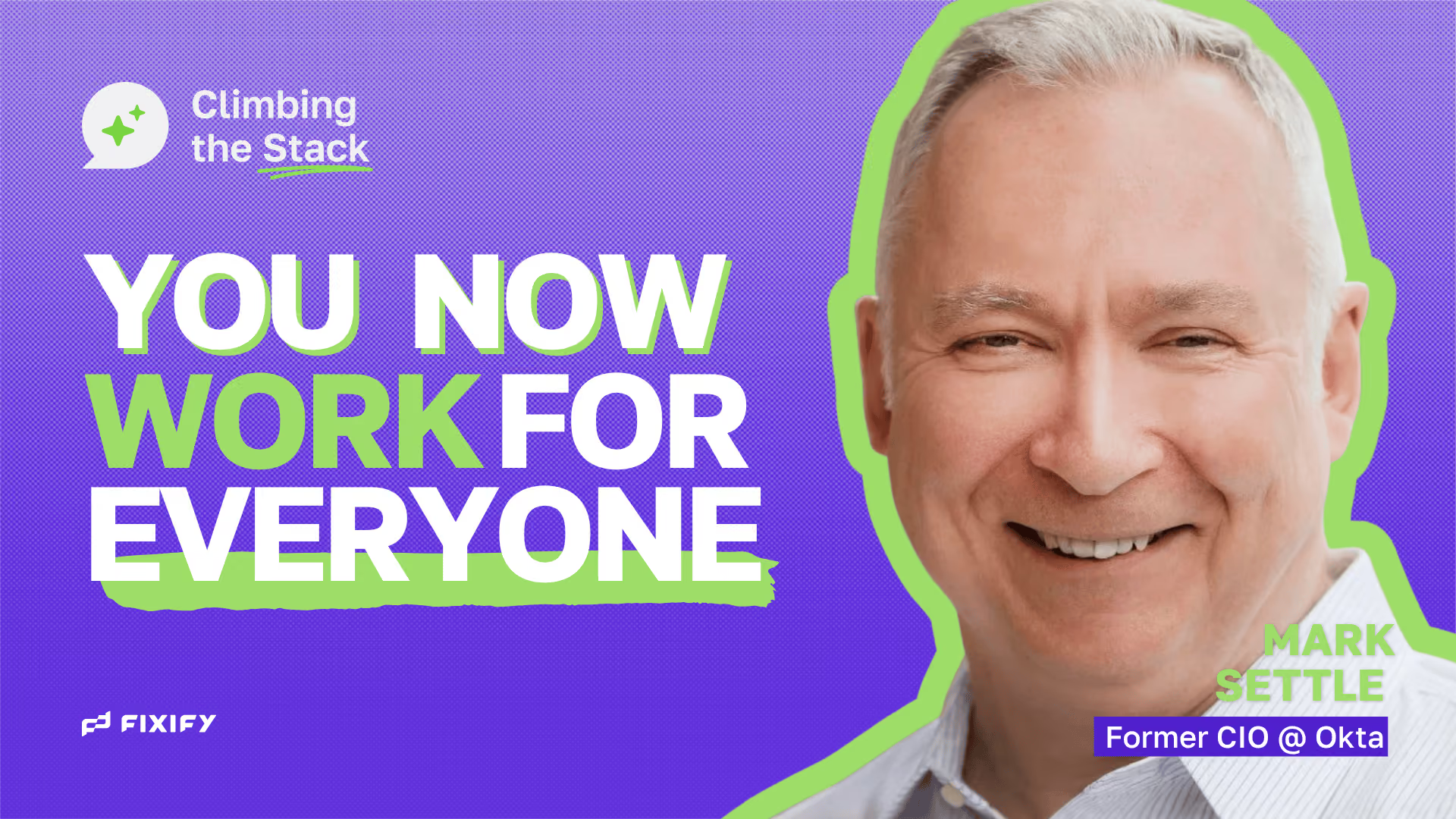
Table of contents


About this episode
Most IT leaders think the move from VP to CIO is about strategy and vision. Mark Settle, former CIO at Okta, says it's really about losing your safety net. As a VP, your CIO shields you from unhappy business partners. As CIO, that protection disappears. You no longer report to just one person. You work for every peer on the leadership team, and the CEO and CFO are constantly asking those peers how you're doing.
Mark didn't come up through a traditional IT path. He started as a geologist processing seismic data at ARCO's research lab, working with Cray supercomputers, before moving into IT leadership and serving as CIO several times. Along the way, he learned that technical skills can get you promoted to director, but understanding company politics is what gets you to the C-suite.
His playbook for building credibility starts with getting out of the conference room. Mark shows up to quarterly sales reviews and walks warehouse floors, even when the business leaders there look confused about why he came. That confusion is the point. Executives judge how seriously you take them by whether you show up, even when you don't learn anything new. He also looks for the one or two lieutenants in each department who shape how their executive sees IT, because those people influence whether projects get funded.
Mark warns that your own IT team can poison your view of the business if you let them, by complaining in conference rooms that "the business just doesn't get it." Getting out into the business is also how you avoid the super user trap, where IT builds features for power users while most employees struggle with the basics.
He also walks Matt Peters through why the AI moment is different from mobile, cloud, or RPA. Beyond automation, AI can remove the constraints of people, bandwidth, and timing that have always limited business processes. He sees the service desk moving from reactive tickets to proactive support that spots problems before users feel them, and he expects entry-level jobs to evolve rather than disappear, with new roles focused on supervising networks of people and AI agents.
What you'll learn in this episode
- Why the move from VP to CIO means losing your safety net
- Why a CIO works for every peer on the leadership team
- How showing up at sales reviews and warehouse floors builds credibility
- How to find the lieutenants who shape how executives see IT
- Why your own IT team can poison your view of the business
- How to avoid the super user trap when building features
- Why AI's potential goes beyond automation
- How the service desk can shift from reactive to proactive
About Mark Settle
Mark Settle is the former CIO at Okta and a multi-time CIO who began his career as a geologist processing seismic data at ARCO's research lab. He is the author of Truth from the Valley: A Practical Primer on IT Management for the Next Decade, and he brings a field-tested playbook for building executive credibility, avoiding the super user trap, and thinking about AI's potential beyond automation ROI.
Resources mentioned
- Truth from the Trenches: A Practical Guide to the Art of It Management by Mark Settle
- Weekly newsletter by Jess Leão
- Connect with Mark Settle on LinkedIn
About the host
Matt Peters is the CEO and Co-Founder of Fixify, where he's redefining the IT help desk for the AI era. Before founding Fixify, he was Chief Product Officer at Expel and held senior leadership roles at FireEye and Mandiant, where he helped pioneer some of the earliest managed detection and response services.
Episodes you might like
Why human care still wins in an AI world
Matt Peters, CEO and Co-Founder of Fixify, joins Joey Pinz to explain why AI should help talented technicians do more meaningful work, not replace them.
Don't break into jail: How to present technology to the board
Brad Lontz, EVP and CIO at CSAA Insurance Group, explains why he keeps no separate AI strategy and how he learns a new business through its value chain instead of starting with the CFO.
Trust your gut: The leadership advice I'd give my younger self
Darragh Curran, CTO and Head of Engineering at Fin, explains why writing code has become the easy part of building software and why he hires for traits over experience.

Join us as a guest!
