.svg)
.svg)
Stop-start-continue: The one question that unlocks IT-business alignment
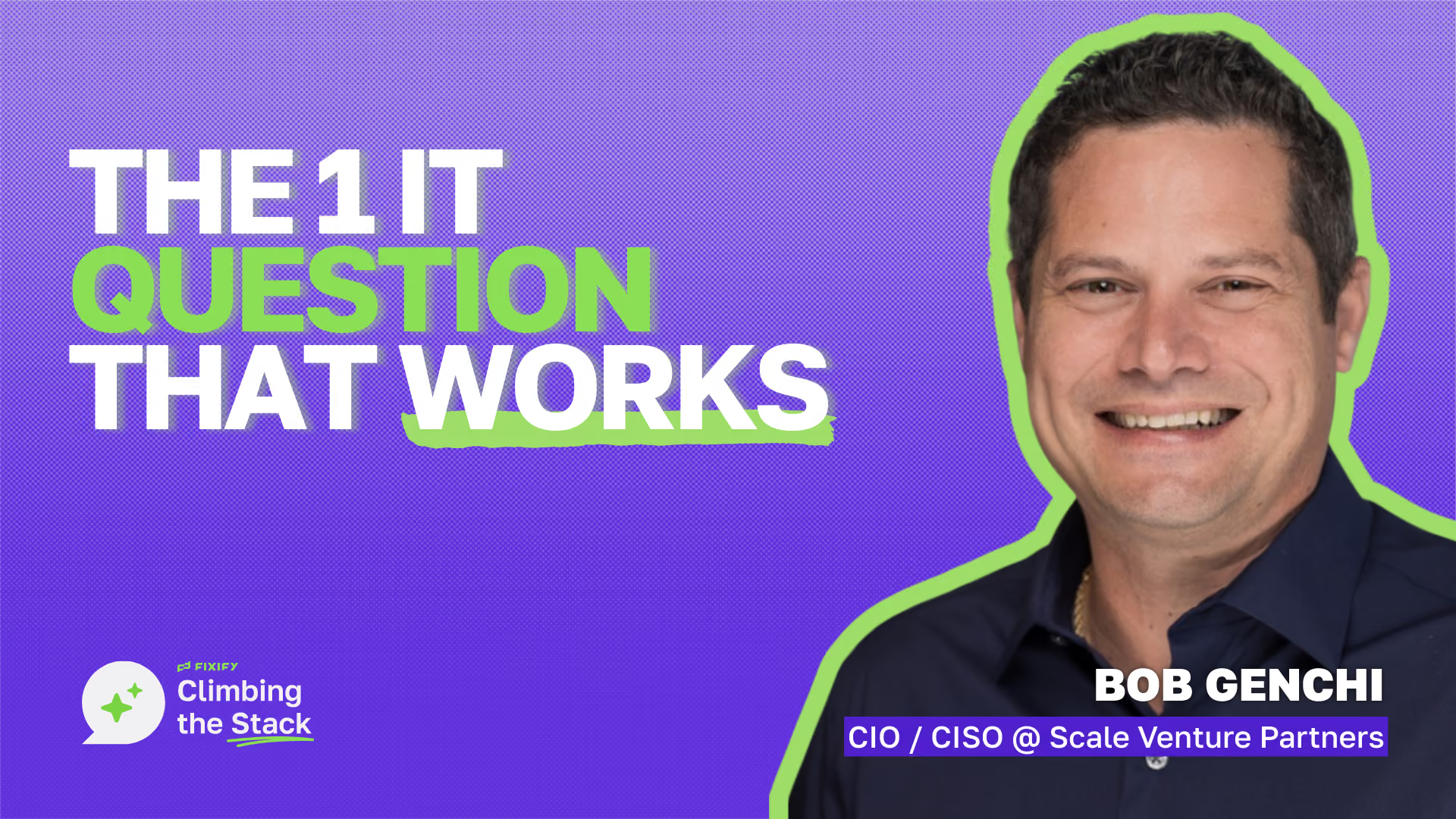
Table of contents


About this episode
Bob Genchi, CIO/CISO at Scale Venture Partners, treats every business unit head as if they report directly to him. Each quarter, he sits down with them and asks one question: What should IT start, stop, and continue doing? There's no preamble and no positioning. He just listens and acts on what he hears.
That approach comes from watching the opposite go wrong. Bob spent seven years at Gap Inc., where an IBM outsourcing deal that looked great at first turned into a productivity sink. The help desk's big board showed solid call volumes, wait times, and closure rates, so by every traditional metric, things looked fine. But users were upset, sentiment was terrible, and the team was demoralized. It taught Bob that dashboards measure activity, not value, and he calls it his postgraduate education in what not to do.
He also walks Matt Peters through the "assume user" method. IT admins use it in their tools all the time to debug problems by seeing exactly what a user sees. Bob applies the same idea to people. When he hits organizational resistance, he steps into the other person's perspective and understands their constraints before proposing a solution.
Bob explains why the real difference between big IT and small IT isn't headcount or budget but operating modality. Amazon runs 30 or more direct reports per manager because that fits its cadence and culture, while a 300-person company with three IT staff runs lean out of necessity. Both work when the structure matches the speed of the business.
He closes with a reality check on AI. In his view, improvements in search matter more for near-term IT value than promises about agents, and many so-called AI agents are trigger jobs with better marketing. The jury is still out on what's genuinely transformative and what's relabeled automation.
What you'll learn in this episode
- The one question to ask business unit leaders every quarter
- Why to treat every business unit head as if they report to you
- Why green help desk metrics can hide unhappy users
- How the "assume user" method helps debug organizational resistance
- Why operating modality matters more than the size of your IT team
- How to communicate IT value through the full business value chain
- Why search improvements may matter more than AI agents right now
- How to tell real AI transformation from relabeled automation
About Bob Genchi
Bob Genchi is CIO/CISO at Scale Venture Partners, where he brings an outsider's perspective to VC-backed companies scaling their IT organizations. His career began with an internship at Gap Inc., where he spent seven years through major IT transformations and outsourcing initiatives, followed by roles at companies including Salesforce, Xactly, and Couchbase.
He advises portfolio companies on building IT operations that balance efficiency with employee experience, drawing on his MIS degree from Santa Clara University and hard-won lessons about what works versus what only looks good in a business case.
Resources mentioned
- How to Fix the Internet podcast by EFF
- Leadership and the One Minute Manager by Ken Blanchard
- Connect with Bob Genchi on LinkedIn
About the host
Matt Peters is the CEO and Co-Founder of Fixify, where he's redefining the IT help desk for the AI era. Before founding Fixify, he was Chief Product Officer at Expel and held senior leadership roles at FireEye and Mandiant, where he helped pioneer some of the earliest managed detection and response services.
Episodes you might like
Why human care still wins in an AI world
Matt Peters, CEO and Co-Founder of Fixify, joins Joey Pinz to explain why AI should help talented technicians do more meaningful work, not replace them.
Don't break into jail: How to present technology to the board
Brad Lontz, EVP and CIO at CSAA Insurance Group, explains why he keeps no separate AI strategy and how he learns a new business through its value chain instead of starting with the CFO.
Trust your gut: The leadership advice I'd give my younger self
Darragh Curran, CTO and Head of Engineering at Fin, explains why writing code has become the easy part of building software and why he hires for traits over experience.

Join us as a guest!
